Make the garden usable
Start with movement, seating, play, planting or maintenance needs before choosing paving and finishes.
Landscaping enquiries that begin with ground, drainage and how the garden will be used, then select materials around that plan.
A short description of the property and the change needed is enough to get started.
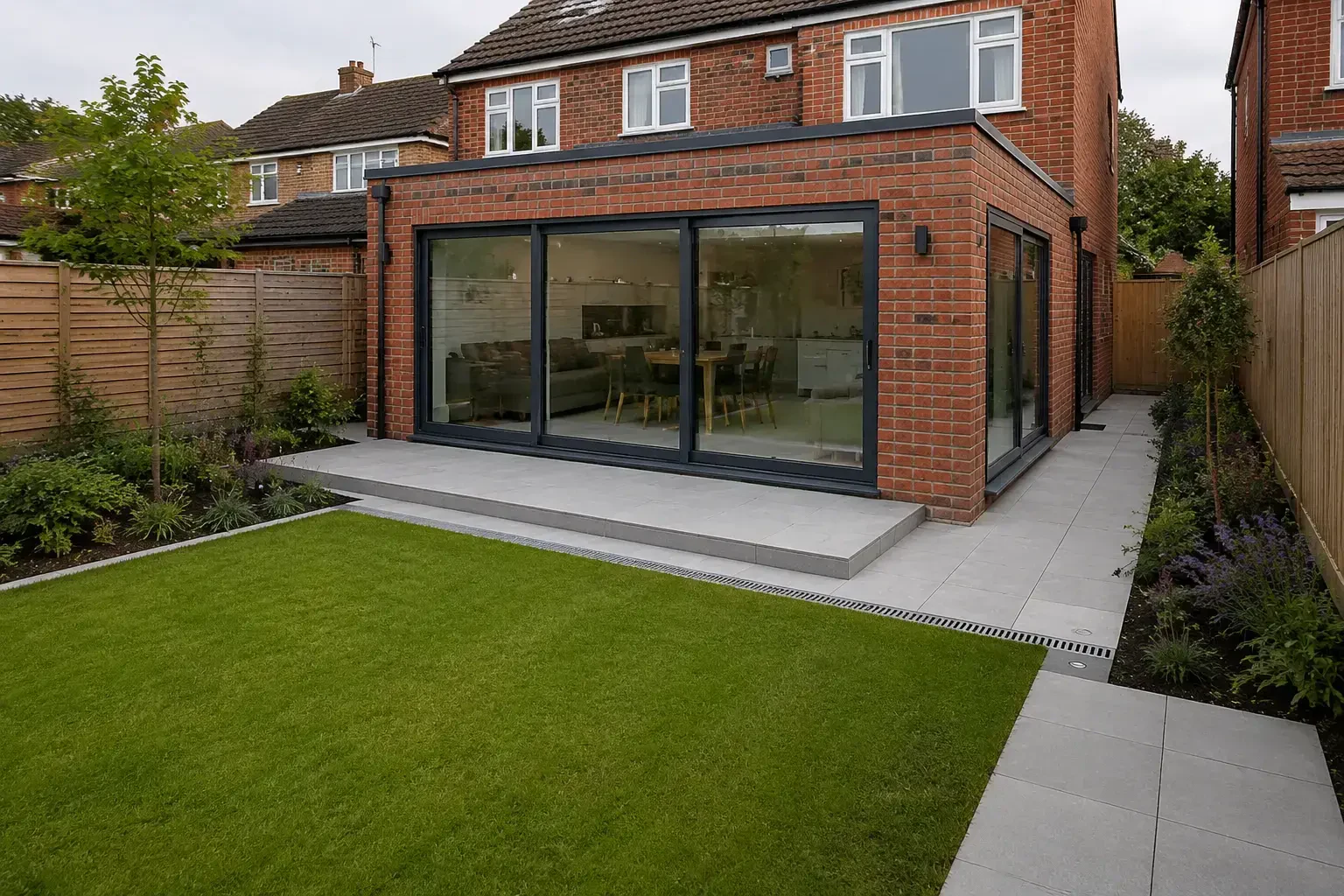
A convincing garden is organised before it is decorated. Routes, levels, retaining, drainage and maintenance determine whether paving, lawns and planted areas remain practical over time.
Explore the options below and see which practical decisions are likely to affect the result.
Start with movement, seating, play, planting or maintenance needs before choosing paving and finishes.
Steps, retaining edges, thresholds and falls shape both access and appearance.
Surface drainage and permeable areas should be planned with the ground rather than treated as an afterthought.
Hard landscaping creates the permanent framework of paths, patios, steps, walls, edges and drainage that makes the outside space usable.
Read about hard landscapingA full garden transformation should solve layout, level, access and drainage problems before adding the materials and planting that provide character.
Read about garden transformationsA patio should have proportions that suit the intended furniture, correct falls away from buildings and a build-up appropriate to the paving selected.
Read about patios and pavingSteps and level changes need comfortable geometry, reliable foundations, visible edges and drainage that does not send water across the walking line.
Read about garden steps and level changesA healthy lawn begins with drainage, soil preparation, grading and aftercare; the turf is the final layer rather than the whole job.
Read about turf and lawn preparationClearance should leave the site ready for its next use, with waste routes, retained features, levels and hidden obstructions considered rather than simply stripped bare.
Read about garden clearance and preparationGarden drainage should begin with the source, route and destination of water, not with a drain installed at the lowest visible puddle.
Read about landscape drainagePreparation, retaining and drainage can sit beneath the visible garden finish.
Doors, thresholds and external levels determine how new rooms connect to the garden.
Frontage layouts may combine parking, paths, planting, boundaries and drainage.
Map the current levels, access, drainage and features worth retaining.
Agree zones and movement before selecting individual paving products.
Complete excavation, drainage and retaining work in the right sequence.
Protect finished surfaces and leave clear maintenance guidance for planted or lawn areas.
See the Landscaping in Burntwood page or browse all areas covered.
Describe the property or site, what needs attention and where the work is.